
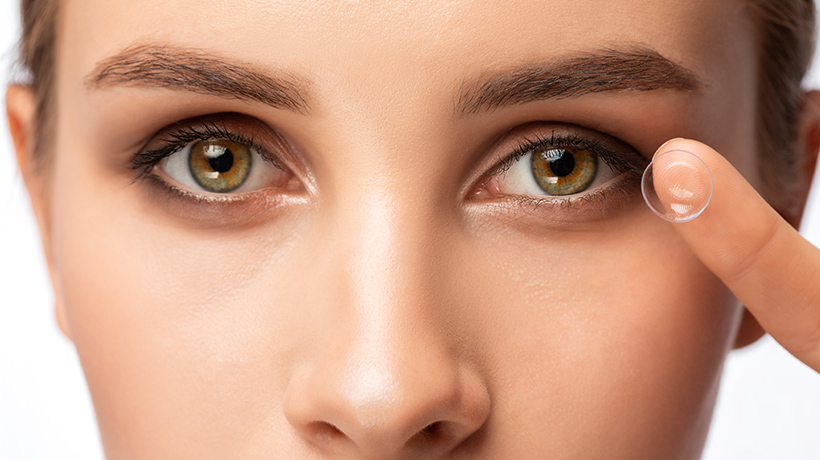
Standard contact lenses work well for a lot of people. But they're built on an assumptionb that the front of your eye is a fairly regular shape and a reasonably healthy surface. When that isn't true, a regular lens either won't sit right, won't see right, or won't feel right.
Specialty lenses are designed for those eyes. They're fitted individually, often over several visits, and they can restore comfortable, clear vision to people who've been told contacts aren't an option for them.
Who they're for
You may be a candidate if you:
Have keratoconus, pellucid marginal degeneration, or another condition that changes the shape of the cornea
Have corneal scarring from an injury, infection, or previous surgery
Have had LASIK, RK, or a corneal transplant and can't get comfortable vision with glasses or standard lenses
Have significant dry eye that makes regular lenses unwearable
Have high astigmatism, or a prescription that standard lenses don't correct well
Have tried soft lenses and simply couldn't tolerate them
Have been told by another provider that you're "not a contact lens candidate"
That last one is worth repeating. A lot of people who were turned away years ago would do well in a specialty lens today. Technology has advanced.
What fitting actually involves
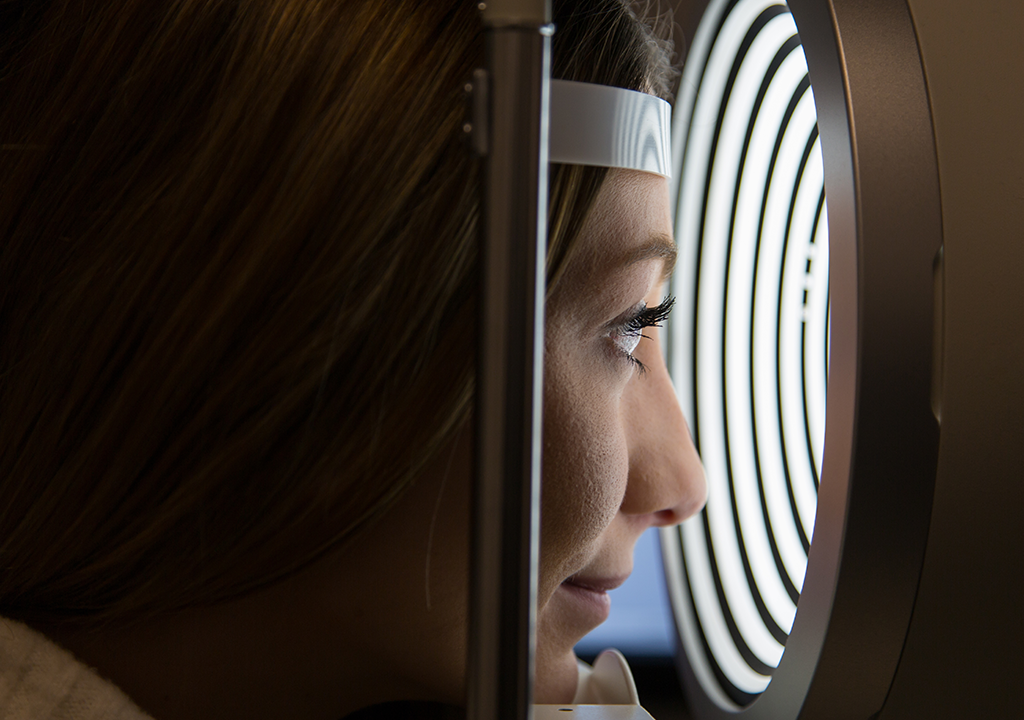
Specialty lenses aren't dispensed from a drawer. Fitting one means mapping the surface of your eye using the MYAH corneal topographer [Insert Technology page], selecting a starting design with a diagnostic fitting set, and precisely scanning the surface of your eye using the anterior segment OCT [Insert Technology page], which means fewer trial lenses and fewer visits before we get the fit right. It may take several visits for refining until the lens sits correctly, the vision is where it should be, and you're comfortable wearing it all day.
We'll also teach you how to insert, remove, and care for your lenses. Sclerals in particular are handled differently from anything you've used before, and nobody gets it on the first try.
We'll stay with you until you do.
Will insurance cover it?
Specialty contact lenses are often more expensive than standard lenses, and the fitting takes more of our time than a routine contact lens fit. But there's something many patients don't know: when specialty lenses provide functional vision that glasses or standard lenses can't give you, they may be covered under your vision plan as a medically necessary contact lens benefit.
Conditions that commonly qualify include keratoconus, corneal scarring, irregular astigmatism after refractive surgery, and a corneal transplant. Every plan sets its own criteria, and some require documentation or prior authorization before they'll approve it.
We'll verify your benefits before you commit to anything, and we'll give you a clear picture of what's covered and what isn't. You can read more about how we handle insurance and payment.
Scleral Lenses
Scleral lenses are the workhorse of specialty contact lens fitting, and for many patients they're transformative.
They're much larger than a standard lens. Instead of resting on the cornea, they vault completely over it and land on the sclera which has far fewer nerve endings. That's why a lens this size is often more comfortable than a small one.
The space between the lens and your cornea is filled with sterile saline when you insert it, and it stays there all day. That does two things at once. It creates a smooth, perfectly regular optical surface in front of an irregular cornea, which is why vision through a scleral is often sharper than anything you've had in years. And it bathes the eye in fluid, which is why sclerals are frequently the answer for severe dry eye when nothing else has worked.
Sclerals come in a range of diameters, and we choose based on your corneal shape, how much vaulting you need, and the health of your eye surface.
Rigid Gas Permeable Lenses
RGP lenses are small, firm lenses made from a material that lets oxygen pass through to the cornea. Because they hold their shape rather than draping over your eye, they correct irregularities that a soft lens can't, and they generally give crisper vision than a soft lens for the same prescription.
They take some adapting to — most people are aware of the lens for the first week or two — but patients who make it through that period often prefer them and stay in them for decades. They're durable, easy to care for, and resistant to protein buildup.
RGPs are a good fit for moderate corneal irregularity, high astigmatism, and anyone who wants the sharpest possible vision. If dry eye is your main problem, a scleral is usually the better choice.
Hybrid Lenses
Hybrid lenses combine the two: a rigid gas permeable center surrounded by a soft skirt. You get the optical quality of a rigid lens with the initial comfort of a soft one, which shortens the adaptation period considerably.
They're a good option for patients who need rigid-lens optics but struggled with the feel of a traditional RGP, and for corneas that are irregular but not dramatically so.
Related: If dry eye is what brought you here, start with our Dry Eye Treatment page.
For referring providers
We fit specialty lenses for corneas that standard lenses can't correct — keratoconus, post-transplant, post-refractive surgery, corneal scarring, and severe ocular surface disease. We welcome referrals from optometrists and ophthalmologists, and we return patients to their primary provider for routine care and eyewear.
Fax referrals to (714) 593−1237 or call (714) 962−9377.
See Refer a Patient for forms and turnaround times.

© 2026 Beachside Optometry. All rights Reserved -
Accessibility Statement
-
Privacy Policy
-
Sitemap
Managed and Designed by 