
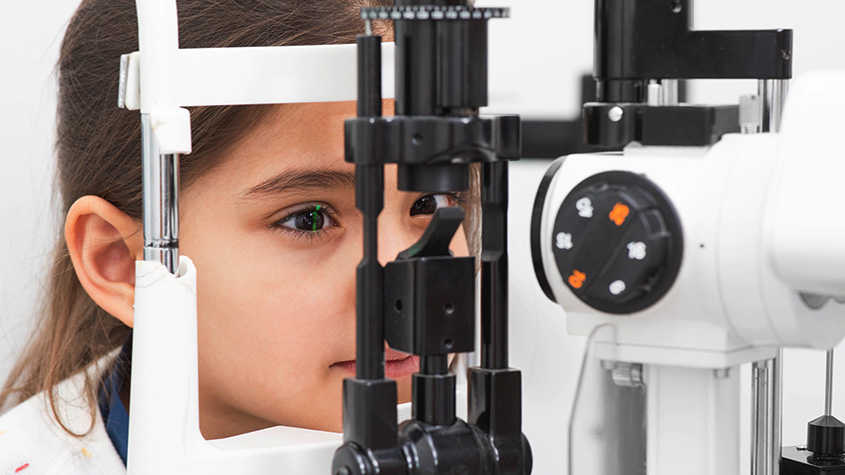
Eye exams for kids, made a little fun.
Our doctors enjoy working with children ages four and up, and we take pride in making an eye exam a learning experience rather than something to dread. If your child is younger than four years old and you notice squinting, frequent eye rubbing, or one eye drifting in or out, call us and we'll point you to a pediatric optometrist or ophthalmologist who sees younger children.
A school vision screening isn't an eye exam
If your child passed a screening at school, it's tempting to think their eyes are fine. But a screening is like getting your blood pressure checked and skipping the rest of the physical: useful, but not the whole picture.
Screenings test one thing – whether your child can see clearly at a distance. They don't test how well the eyes focus up close, whether the eyes work together, depth perception, color vision, or the health of the eye itself. A child can pass a screening and still struggle to read a page for more than a few minutes.
What we check
A full exam evaluates vision at distance and near, eye focusing, teaming, and tracking abilities, depth perception, color vision, signs of eye turn or lazy eye, and the health of the eye inside and out.
Signs worth an appointment
Sitting very close to the TV or holding a tablet close to their face
Squinting, head tilting, or covering one eye
Rubbing their eyes often
Losing their place while reading, or skipping lines
Headaches or tired eyes after school
Avoiding reading and close-up work
Children often don't say anything, because whatever they see looks normal to them. They have nothing to compare it to.
How often should my child be seen
Annually, starting at four, and sooner if you notice any of the signs above or if nearsightedness runs in your family.
If your child is becoming nearsighted
Nearsightedness usually progresses through childhood, and there are treatments that can slow it down.
When you book, let the receptionist know the appointment is for a child, so we can schedule enough time.

© 2026 Beachside Optometry. All rights Reserved -
Accessibility Statement
-
Privacy Policy
-
Sitemap
Managed and Designed by 